The margin scorecard
Most event software prices from markup: pick a number that feels right and hope it holds. Florio validates margin, not markup. You enter what the work actually costs first, and the selling price is checked against your target before a proposal can go out. It is the single idea that ties the whole platform together.
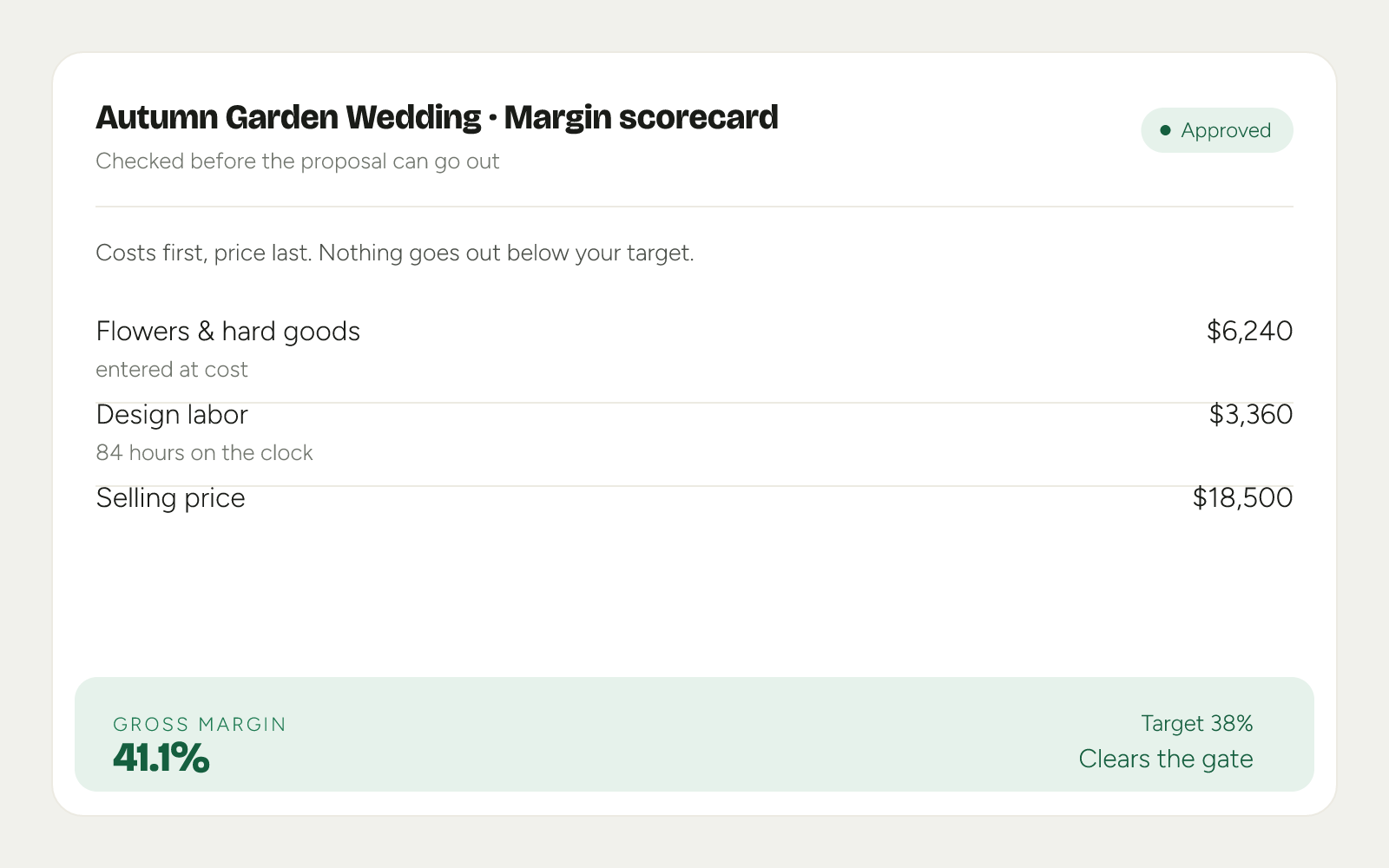 Product mockup; data illustrative.
Costs first, price last
The scorecard is built from the bottom up, in this order:
- Real product cost. Flowers and hard goods entered at what you pay for them.
- Real labor. Design and production hours, valued at your rates.
- Then the selling price. With the costs already in, the margin is a fact, not a guess.
Keeping the order honest is the whole point: the price is the last thing you decide, once you can see what the event takes to produce.
The approval gate
Set a target margin for your studio. When a proposal comes in under it, Florio holds it at the gate and shows you by how much, so you can raise the price, trim the design, or make a deliberate exception with your eyes open. Nothing quietly goes out below the line and turns into a surprise in the spring.
The numbers stay true after the event
Because the calendar, the time clock, and the books are the same system, the margin you proposed can be measured against what actually happened. Flowers came in under budget or labor ran long, and the after-the-fact number reflects it. That is also why commissions can run on actuals; see How Florio works with QuickBooks Online.