Write the scope of work
Line items say what the client is buying. The scope of work says what they will experience: the lobby tree is 22 feet, it is installed over one week, it comes down in the second week of January. On a project that runs for weeks it is the document everyone goes back to, so Florio keeps it on the proposal itself, carries it forward with every revision, and assembles the current version on the contract card from the signed baseline plus every signed amendment.
Before you start
You need permission to edit proposals. The AI drafting buttons appear on every workspace but only work once AI drafting has been configured for yours; until then they are disabled and their tooltip says so.
Write it in the builder
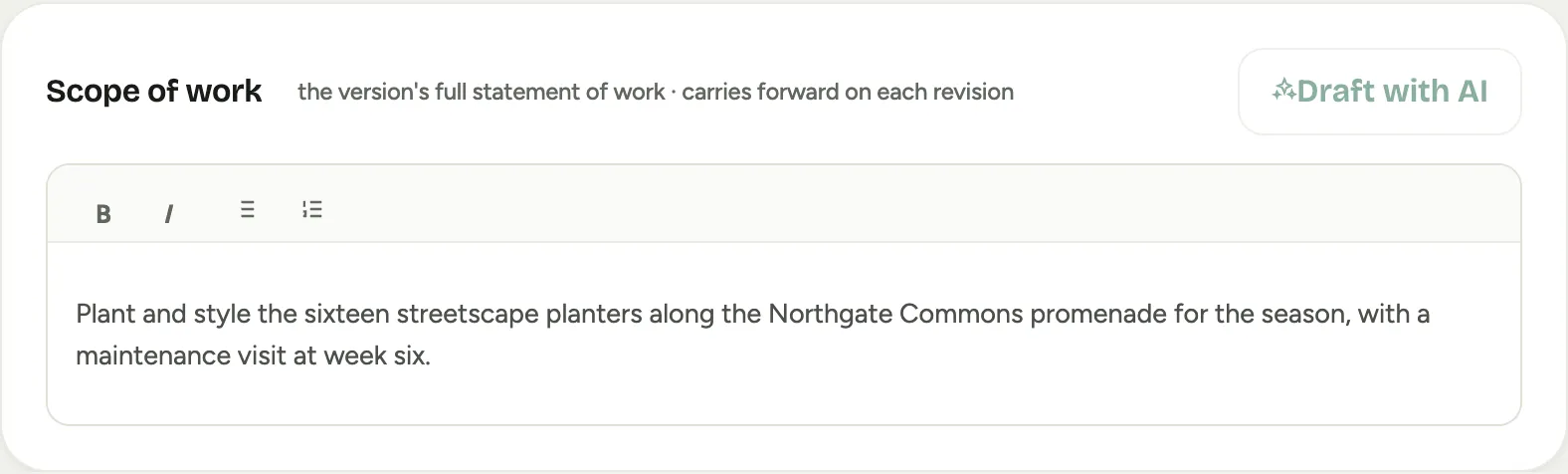
- Open the proposal in the builder. The Scope of work card sits above the sections, with a small rich-text editor: bold, italic, bulleted and numbered lists.
- Write the scope as the client would read it: the functionality being delivered, in plain prose. Leave the quantities and prices to the lines.
- It saves with the proposal. When you revise the proposal, the scope of work comes with it, so you edit what is there rather than starting again.
 Screenshot from a demo workspace; data illustrative.
Once the client signs, that version’s scope of work becomes the contract’s baseline and shows under Scope of work on the contract card.
Amend it with a change order
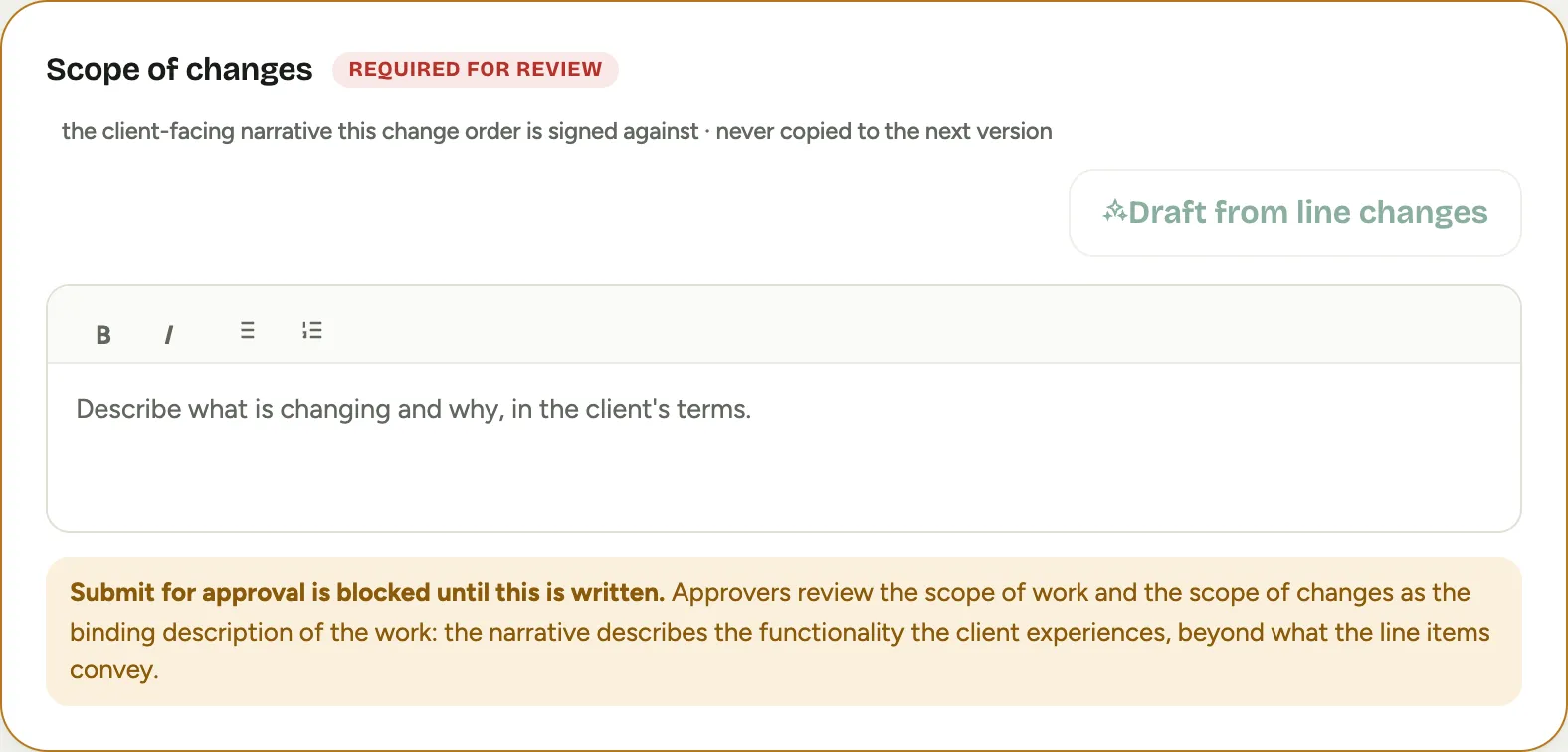
On a contracted project every revision is a change order, and the builder shows a second card, Scope of changes, marked Required for review. This is different from the scope of work:
- The Scope of work is the whole statement, updated. Change the sentence about the lobby tree if the tree changed.
- The Scope of changes is the narrative of this change only, in the client’s terms, and it is what the client signs on the change-order document. It is never copied to the next version.
 Screenshot from a demo workspace; data illustrative.
Submit for approval stays blocked until the scope of changes is written. Once it is, the card confirms it, and approvers see both the updated scope of work (new language highlighted) and the scope of changes on the review screen.
When the client signs, the scope of changes becomes a signed amendment. The contract card shows the baseline first, then each amendment with its change-order reference and the date it was signed, in acceptance order. Internal change orders do not amend the client-facing scope; their note documents the internal change and stays internal.
 Screenshot from a demo workspace; data illustrative.
Draft it with AI
Two buttons can write a first draft for you, when AI drafting is configured for your workspace:
- Draft with AI on the scope of work card reads the proposal’s lines, titles and descriptions and writes a scope in prose. It does not invent items that are not on the proposal. The draft lands in the editor for you to edit before it goes anywhere.
- Draft from line changes on the scope of changes card reads the difference between this version and the signed one and writes the narrative of the change. It also writes a one-sentence amendment and appends it to the scope of work, so both stay in step.
Both are drafts. Read them, fix them, and make them yours before you submit.
Good to know
- The editor keeps formatting to bold, italic and lists so the text renders the same on the review screen, the client’s signing page and the PDF.
- The contract card shows the section only when there is a scope of work or at least one amendment to show; a project signed with an empty scope simply has no section yet.