Plant care
Esta página aún no está disponible en tu idioma.
Between the big events, plant maintenance is the quiet, recurring revenue that keeps a studio steady: offices, hotels, and restaurants that pay every month to keep their greenery alive and looking sharp. Florio runs it as its own line of business, on the same client record as everything else, so the contracts, the visits, and the billing all stay in one place.
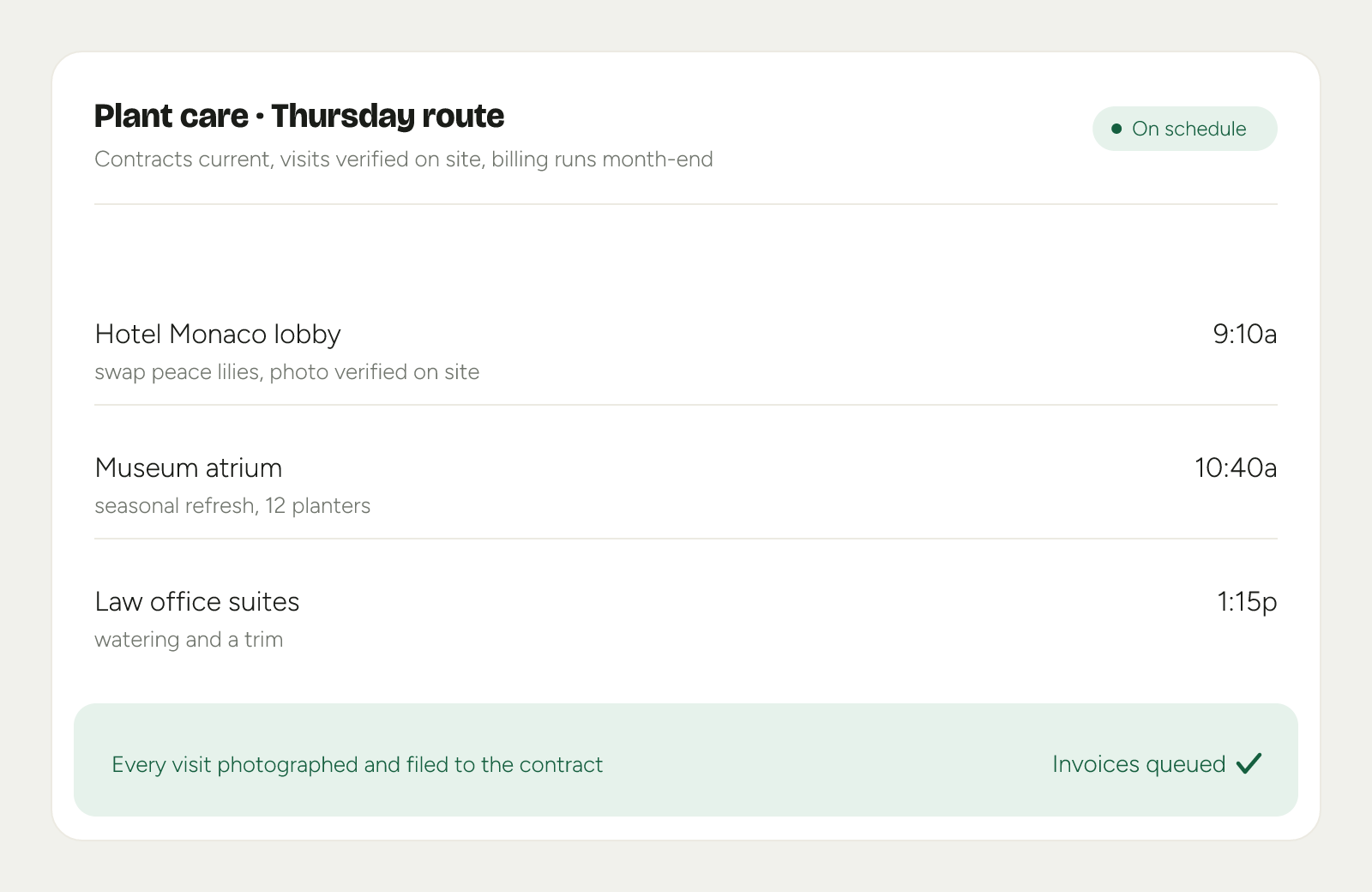 Product mockup; data illustrative.
Contracts that hold the schedule
Each account is a contract with a cadence: weekly, every other week, monthly. Florio turns that cadence into scheduled visits so nothing is missed and nobody has to keep the calendar in their head.
- The route builds itself. Visits due on the same day group into a route for whoever is driving, in a sensible order.
- The history stays with the account. What was swapped, what struggled, what the client asked for last spring: it lives on the client timeline, not in a technician’s memory.
Each contract also carries Contract notes, for the things that are not a schedule: the gate code, the loading dock hours, the standing instruction from the facilities manager. The crew board opens this same page, so what you write there reaches whoever is driving.
 Screenshot from a demo workspace; data illustrative.
The plant list
A contract lists the plants you look after: what each one is, where it sits, how many, and the rate per plant. That list is what the monthly price is built from, so two things about it are worth knowing.
- Whose plant is it. Owned by records whether a plant belongs to the account (Client) or to you, placed on site under a rental (Ours (rental)). It does not change what you charge. It records the fact, so the contract can answer which greenery is yours when the contract ends. Plants on contracts that predate this all read as the client’s, which is the safe assumption.
- Every plant has a name. A line needs a species before the list saves. A nameless row is too easy to leave behind, and it counted toward the monthly price all the same.
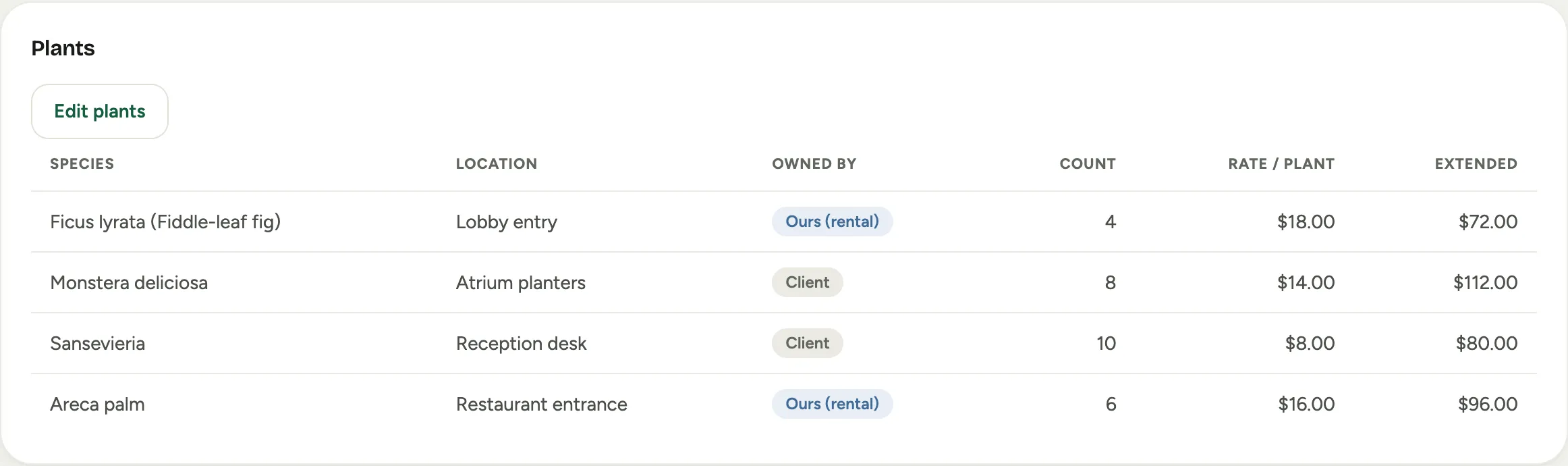 Screenshot from a demo workspace; data illustrative.
Editing the list is safe for what you leave alone: change one plant’s name or rate, and the condition history your crew recorded about the other plants on past visits stays put.
Verified on site
A maintenance visit is only worth billing if it actually happened. Florio captures proof at the point of work: the technician marks the visit done on site, with a photo when it helps, and it lands on the account’s timeline with a time. When the facilities manager asks whether anyone came this month, the answer is a picture, not a promise.
Billing that runs at month-end
Recurring contracts should not need a person to remember to invoice them. Florio rolls the month’s completed visits into the maintenance billing so the invoice reflects the work that was done, consistent with how the rest of your numbers reconcile. Add a one-off (a big seasonal refresh, a plant replacement) and it rides along on the same statement.